
MWC Barcelona is ending. Here’s why some people aren’t leaving yet.
The last badge scans of MWC Barcelona 2026 are happening as you read this.
More than 100,000 people have spent the past four days inside Fira Gran Via talking about AI infrastructure, 5G, hardware roadmaps, and funding rounds. They’ve eaten standing up, collected tote bags, and moved fast.
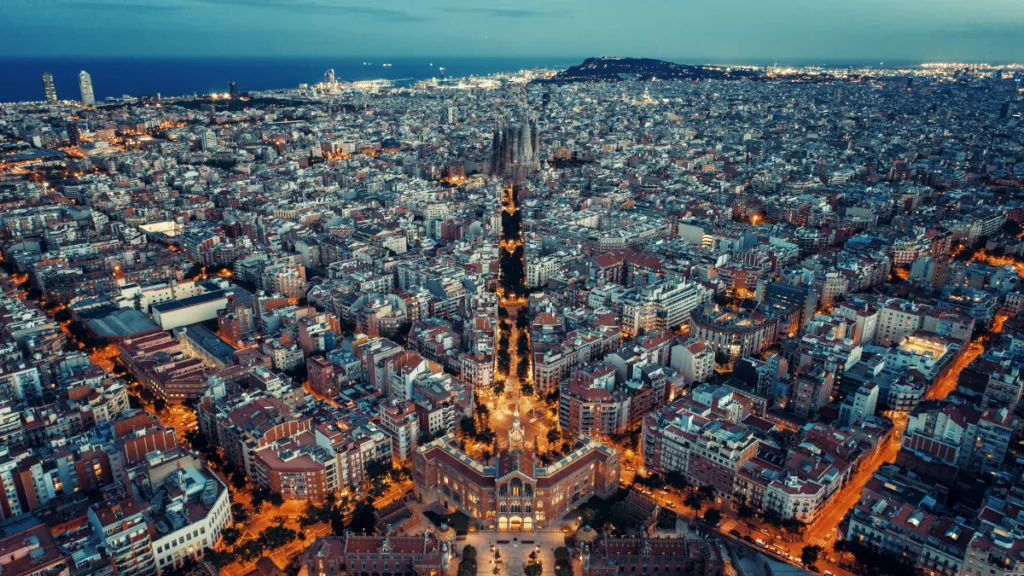
And somewhere between badge scans, a lot of them had the same quiet thought, usually in a taxi, passing the Sagrada Família at dusk, the Eixample grid opening up on either side, terraces still full despite it being early March.
I’d like to actually be here sometime. Not like this. Actually here.
Some will fly home tomorrow and forget about it. Others are already doing the math.
The version of Barcelona MWC doesn’t show you
During the conference, the city feels slightly surreal. English spoken louder than usual. Conversations about valuations happening in places built for slow lunches.
Step two blocks off the main arteries and it’s a different city entirely, one that most business travellers never find because they don’t have the time. They arrive Sunday night, grind through four conference days, and leave Friday morning.
The ones who extend, even by a week, tend to become the people who come back. Or the ones who start asking whether a longer stay could work around their schedule next time.
What happens to prices the moment MWC ends
Conference hotel rates in Barcelona are brutal. That’s not an opinion, it’s just what happens when 100,000 people need rooms in the same city on the same dates.
The moment MWC wraps, pricing drops, but it doesn’t collapse. You’re still paying a premium for the same single room, the same layout, the same minibar you won’t touch.
A properly furnished apartment in Barcelona, with a kitchen, a real workspace, and a living room, for the two or three weeks after the conference will cost significantly less per night than what you paid this week. And the quality of daily life changes completely. You cook. You work at a real desk. You stop living out of a suitcase.
For teams of four or five who came together for MWC, the numbers become even more obvious. Multiple hotel rooms versus one well-located apartment in Eixample. The comparison doesn’t need much explaining.
What the next two weeks actually look like
The conference ended today. Here’s what the city looks like from tomorrow.
The city without the compression. Barcelona exhales the moment MWC leaves. Restaurant tables open up. Museum queues disappear. The Boqueria functions as a market again rather than a tourist attraction with a queue. March is mild, increasingly sunny, and genuinely pleasant, the kind of weather northern Europeans specifically fly south to find.
Productive working conditions. A good apartment in Eixample or El Born, fast WiFi, no commute, and daylight that doesn’t disappear at 4pm. This is the environment where a lot of people do their better thinking. Not a holiday, just a better base than the office.
A real read on the market. Barcelona’s tech ecosystem, the 22@ district, the startup network, the intersection of southern European talent and international capital, is active and growing. Spending time here beyond the conference floor gives you a ground-level understanding that four days inside Fira simply can’t.

Where to base yourself
Most MWC attendees stay near Fira or along the airport corridor. Functional, but it tells you nothing about the city.
Eixample is the strategic choice for an extended stay. Wide streets, strong infrastructure, every amenity within walking distance, and 20 minutes from Fira by metro, which no longer matters, but the central position does. It’s where a daily routine forms naturally, without effort.
El Born is the alternative worth knowing. Smaller, more concentrated, with a creative lean. More character in the buildings, more texture in the streets. If Eixample is where you settle in, El Born is where you feel the city.
A few things worth knowing before you book
After a week of conference pace, the temptation is to book the first place that looks decent and move fast. Two weeks in the wrong apartment is a miserable experience.
The management matters as much as the apartment itself. Barcelona’s rental market is complex, professional operators with a track record and genuine business traveller experience are not the same as a residential flat listed online. Ask who you’re dealing with before you commit.
Verify the WiFi properly. Every listing claims high speed. Ask for specifics. If they can’t give them, assume it won’t hold up through your video calls.
And prioritise the workspace over the bedroom photos. The desk and chair are where you’ll spend most of your day. A proper setup is not optional.
The city rewards a longer look
Barcelona is in an interesting moment. Property prices are up. The rental market has tightened. The conversations about what kind of city this should be are ongoing and real.
None of that makes it less worth staying in. If anything, the city that’s emerging from that reckoning is more intentional, more liveable, and more interesting to the people who aren’t just passing through.
That version of Barcelona takes more than four days to find. It takes a Tuesday afternoon in March when the light comes through the Eixample grid at an angle and the whole thing suddenly makes sense.
Some people are changing their flights right now. If you’re one of them, the next step is finding the right place to land.
Bizflats manages premium serviced apartments in Eixample, El Born, and other central Barcelona neighbourhoods — set up specifically for professionals and teams who come to the city for conferences, projects, and longer assignments. Professional support, everything in place before you arrive.